

Cardan Shaft Alignment Guide + Expert Tips to Avoid Misalignment Damage

Cardan shafts, also known as universal joints, are engineered to connect non-linear shafts, compensating for any offset between the driver and driven components. This design allows for the transmission of torque and rotation while accommodating variations in shaft angles.
Importance of Alignment:
Despite their flexibility, Cardan shafts have limitations, particularly when it comes to large angular misalignments. Substantial misalignments can lead to increased vibration, affecting the efficiency and lifespan of the machinery. To counteract this, precision alignment is essential.
What Is a Cardan Shaft?
A Cardan shaft, also referred to as a Cardan joint drive shaft, is a mechanical power transmission component that uses one or more universal (Cardan) joints to transmit torque between shafts that are not collinear. Unlike rigid couplings, Cardan shafts are specifically designed to accommodate angular displacement while maintaining continuous power transfer.
Cardan shafts are widely used in applications where structural movement, long shaft spans, or installation constraints prevent perfect shaft collinearity. Typical applications include marine propulsion systems, industrial gear drives, rolling mills, power generation equipment, and heavy-duty process machinery.
From an engineering perspective, a Cardan shaft does not “solve” alignment, it manages misalignment within defined geometric limits. Operating outside those limits introduces dynamic effects that directly impact drivetrain reliability.
Why Cardan Shaft Alignment Is Critical
Although Cardan shafts are designed to operate with angular misalignment, proper Cardan shaft alignment is still critical to control internal forces, rotational uniformity, and component loading.
When alignment is incorrect, Cardan shafts generate:
-
Non-uniform angular velocity, especially at higher joint angles
-
Cyclic torsional excitation, transmitted into gearboxes and bearings
-
Elevated bearing and gearbox loads, often mistaken for internal defects
-
Accelerated wear of cross bearings, splines, and yokes
In marine propulsion and high-torque industrial systems, these effects are amplified by long shaft lines, structural deflection, and variable operating loads.
For complex Cardan shaft systems in marine and industrial applications, professional laser alignment services are often required to control these dynamic effects over the full operating envelope.
Cardan Shaft Alignment vs Conventional Shaft Alignment
Cardan shaft alignment differs fundamentally from conventional shaft alignment, and treating them the same is a common and costly mistake.
In conventional shaft alignment, the objective is to make the driver and driven shaft centerlines collinear, minimizing both angular and parallel offset at the coupling.
In Cardan shaft alignment, the objective shifts to:
-
Controlling angular misalignment within allowable limits
-
Minimizing parallel offset, which Cardan shafts tolerate poorly
-
Ensuring equal and opposing joint angles in double-Cardan configurations
-
Maintaining correct phasing between universal joints
While angular misalignment is permitted, compound angles, where angular and parallel errors coexist, create complex loading patterns that significantly increase vibration and fatigue.
Improper Cardan shaft alignment often results in torsional vibration, rather than purely radial vibration, which can mislead diagnostics if the alignment geometry is not fully understood.
Why Cardan Shaft Alignment Is Critical
Although Cardan shafts are designed to operate with angular misalignment, proper Cardan shaft alignment remains critical to control internal forces, maintain rotational uniformity, and limit component loading throughout the drivetrain.
When alignment is incorrect, Cardan shafts can generate:
-
Non-uniform angular velocity, particularly at higher joint angles
-
Cyclic torsional excitation, which is transmitted into connected gearboxes and bearings
-
Elevated bearing and gearbox loads, frequently misdiagnosed as internal component defects
-
Accelerated wear of cross bearings, splines, and yokes, reducing service life
In marine propulsion systems and high-torque industrial applications, these effects are amplified by long shaft lines, structural deflection, thermal growth, and variable operating loads. As a result, alignment errors that appear acceptable at standstill can become highly detrimental under operating conditions.
For complex Cardan shaft systems in marine propulsion shaft alignment and industrial environments, Cardan shaft laser alignment services are often required to accurately control these dynamic effects across the full operating envelope.
Common Cardan Shaft Alignment Errors
Field experience shows that Cardan shaft issues are rarely caused by the shaft itself, but by system-level alignment errors. The most common include:
Angular vs Compound Angle Errors
Allowable angular misalignment is often exceeded when combined with parallel offset, creating compound angles that dramatically increase internal joint loading.
Parallel Offset
Cardan shafts are highly sensitive to parallel offset. Even small lateral displacements introduce bending stress into the shaft tube and uneven loading in the joints.
Phasing Issues
Incorrect phasing between universal joints prevents velocity fluctuation cancellation, resulting in torsional oscillation and cyclic gearbox loading.
Bearing and Gearbox Loading Effects
Misalignment-induced forces are frequently transmitted into connected gearboxes and bearings, leading to premature failures often misdiagnosed as internal component defects.
These issues are commonly identified during laser-based Cardan shaft alignment inspections, especially in long-shaft or high-power installations.
Key Alignment Considerations/rules:
1. Offset Compensation:
- Recognize how Cardan shafts excel at compensating for offset between shafts, enhancing their versatility.
- A Cardan Shaft is good for Offset misalignment only, not angle misalignment.
2. Misalignment in either vertical or horizontal plane:
The offset misalignment that is entered has to either be in the vertical or the horizontal plane. It cannot be in both.
4. Angle present at each knuckle should be the same: The angle that is presented at each one of the knuckles in the Cardan Shaft has to be the same.
5. Angle at knuckle should not exceed 3.5 degrees: The angle that is presented at the knuckles should not exceed 3.5 degrees.
6. Alignment Tools:
- Explore advanced alignment tools, such as laser alignment systems, designed to streamline and enhance the alignment process.
These are some options available for Cardan Measurement:
Rotalign Systems
Cardan Shaft Alignment Bracketing

Step-by-Step Alignment Procedure using a shaft alignment system & cardan shaft alignment:
1. Pre-Alignment Checks:
- Before diving into the alignment process, conduct thorough checks on the equipment, ensuring that all components are in good condition.
2. Positioning the Equipment:
- Properly position the machinery or equipment, making sure it is securely mounted and supported to avoid any shifts during the alignment process.
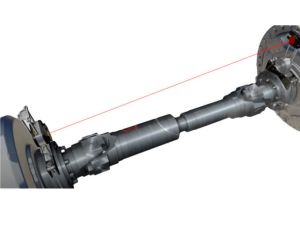
3. Checking Angular Misalignment:
- Measure and assess the angular misalignment between the connected shafts. This is a critical parameter for Cardan shafts.
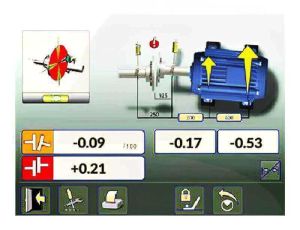
4. Adjustments and Corrections:
- Based on the measurements, make adjustments to correct any misalignments. This may involve tweaking the positioning of the shafts or modifying the joint angles.
Closing Engineering Perspective
Cardan shafts provide flexibility where rigid alignment is impractical, but they demand greater geometric discipline, not less. Proper Cardan shaft alignment requires a clear understanding of joint behavior, shaft geometry, operating conditions, and drivetrain dynamics.
When aligned correctly, Cardan shaft systems operate smoothly and reliably. When aligned incorrectly, they introduce hidden forces that shorten component life and compromise system performance.
Featured Resource
Learn about Alignment Double Cardan Shaft check procedure.
Alignment Check
– Double Cardan Shaft
FOLLOW US
Request a Quote
ADVANCED SHAFT ALIGNMENT TRAINING EBOOK

